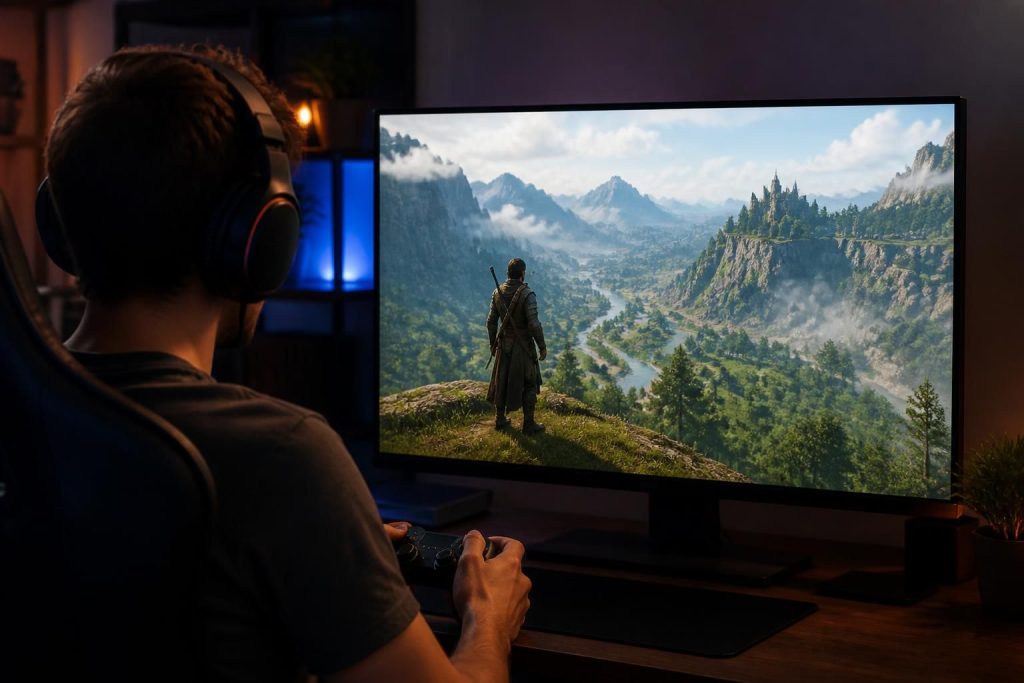
Open-world game design is a complex yet immensely rewarding aspect of video game development that allows players to explore vast, intricately crafted environments at their own pace. Unlike linear games, where paths and narratives are dictated by the developers, open worlds offer a playground of possibilities, encouraging exploration, spontaneity, and creativity. This design approach not only enhances player engagement but also fosters a deeper connection with the game world. In this article, we delve into key principles of open-world game design that contribute to creating immersive experiences for players.
Creating a Believable World
One of the cornerstones of open-world game design is the creation of a believable and coherent game world. This involves crafting a landscape that feels authentic and alive. Developers should pay attention to environmental storytelling, where the surroundings convey narratives through visual cues. For instance, abandoned buildings may hint at past events, while vibrant towns can suggest a thriving community.
Integrating realistic ecosystems with wildlife, weather patterns, and day-night cycles further enhances immersion. Players are more likely to feel invested in a world that reacts to their actions and changes dynamically over time. Great examples of this are found in games like The Legend of Zelda: Breath of the Wild, where the environment not only serves as a backdrop but also influences gameplay mechanics, such as weather affecting combat and exploration.
Player Agency and Freedom of Choice
Another fundamental principle of open-world game design is providing players with agency and the freedom to make consequential choices. Unlike linear narratives, players in an open-world environment should feel that their decisions matter, whether it’s choosing which quests to undertake, how to interact with NPCs, or the order in which to explore locations. This sense of freedom enhances the personal connection players develop with their characters and the world.
Games like Skyrim exemplify this principle effectively. Players can forge their own paths, whether they choose to pursue the main storyline, delve into side quests, or simply explore the vast landscapes. This level of choice fosters replayability, as players can experience the game differently each time. Furthermore, allowing for multiple endings based on the player’s decisions deepens the investment in the game world.
Engaging NPC Interactions
Non-playable characters (NPCs) play a critical role in enriching the open-world experience. Engaging NPC interactions can make a game feel more vibrant and lived-in. Developing NPCs with distinct personalities, backstories, and dynamic dialogue options can lead to meaningful interactions that resonate with players.
For example, games like The Witcher 3: Wild Hunt showcase a range of NPCs, from quest-givers to background characters, each contributing to the overall narrative and world-building. Players can engage with these characters through dialogue that reflects their choices and prior actions, offering a sense of continuity and depth. Moreover, NPCs that respond to player actions can create a more interactive and believable world, encouraging players to engage with them on a deeper level. For more on this topic, see เว็บสล็อต.
Dynamic Events and Quests
Open-world game design thrives on dynamic events and quests that can be discovered organically by players. Rather than relying solely on traditional quest structures, developers can include spontaneous encounters or environmental events that encourage exploration and experimentation. This principle helps maintain a sense of novelty and surprise, keeping players engaged over time.
Games like Red Dead Redemption 2 implement random events that players can stumble upon, such as ambushes or interactions with strangers, enriching the gameplay experience. These events can lead to unexpected rewards or consequences, reinforcing the game’s immersive qualities. Furthermore, a mix of structured questlines alongside these dynamic events allows players to choose how they want to engage with the game world, balancing guided experiences with free-form exploration.
Meaningful Progression Systems
A well-designed progression system is vital in open-world game design as it rewards exploration and engagement. Players should feel a sense of growth not just in skills and abilities, but in their relationship with the game world. This can be achieved through a variety of systems, including leveling up, unlocking new areas, or gaining new abilities based on exploration.
Incorporating a progression system that encourages players to delve into all aspects of the game can keep engagement high. For instance, collecting items or completing challenges can unlock new areas or story arcs, enticing players to experience everything the world has to offer. Additionally, offering customization options for characters or equipment can allow players to express their individuality, making their journey through the game world feel personal.
In conclusion, open-world game design is a multifaceted discipline that revolves around creating immersive experiences. By focusing on building believable worlds, providing player agency, ensuring engaging NPC interactions, incorporating dynamic events, and implementing meaningful progression systems, developers can craft experiences that resonate with players long after the game is completed. The principles of open-world game design not only enhance player engagement but also establish a lasting connection to the virtual worlds we explore, making them memorable and impactful. As the gaming industry evolves, these principles will continue to guide the creation of rich, immersive experiences that captivate a diverse audience.